
Vitiligo: Causes, Types, Diagnosis and Evidence-Based Treatment
- Vitiligo is a chronic autoimmune condition in which the pigment-producing cells (melanocytes) are destroyed, leaving well-defined milky-white patches. It is not contagious and not a cancer.
- It affects roughly 0.5–2% of people worldwide, and around 0.5% in Chinese population studies — an estimated 35,000–40,000 people in Hong Kong.
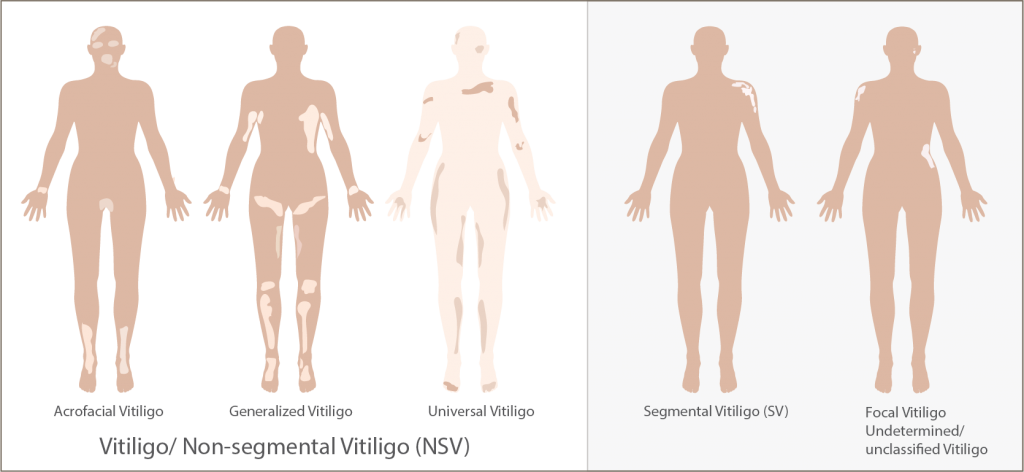
- There are two main forms: non-segmental (about 85% of cases, symmetrical, may progress unpredictably) and segmental (one-sided, early onset, stabilises quickly, responds well to surgery).
- Effective treatment exists. The three goals are to stop it spreading, restore pigment, and prevent relapse.
- A topical JAK-inhibitor cream is now registered in Hong Kong for non-segmental vitiligo involving the face, alongside established options such as narrowband UVB, 308 nm excimer, topical calcineurin inhibitors and grafting.
- Repigmentation is slow. Expect a minimum of 3–6 months before judging any treatment, and 12–24 months for a full result.Treatment