
認識白蝕

白蝕的成因
白蝕成因為多重因素,並無單一原因。
遺傳易感性:約 20% 患者有家族成員患病。已識別逾 50 個易感基因位點,多與免疫調節有關。但遺傳並非決定性 - 父母患病會提高風險,卻不代表必然發病。
自身免疫:主要機制,如上文所述。
氧化壓力:白蝕患者的黑色素細胞處理氧化壓力的能力較弱,可能因而暴露於免疫攻擊之下。
誘發因素:外傷、曬傷、摩擦、化學物質接觸(部分染髮劑、黏合劑、工業橡膠中的酚類)、嚴重疾病或重大精神壓力,均可能在發病前出現。
同形反應(Koebner 現象):在受傷部位出現新白斑,例如抓傷、燒傷、手術疤痕,或皮帶、內衣帶長期摩擦之處。出現同形反應代表病情正處於活躍期。
白蝕的分類
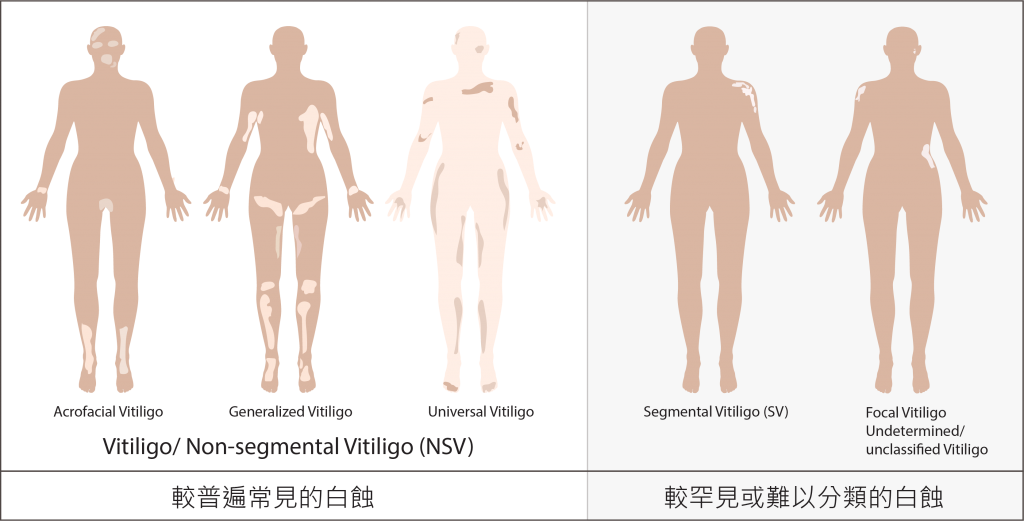
分類直接影響治療方案與預後。以下依照 Vitiligo Global Issues Consensus Conference 的國際共識框架。
類型
特徵
病程
類型
非節段型(NSV)
特徵
病程
約佔 85%。左右對稱分布,好發於面部、手部、手肘、膝蓋、足部、生殖器
不可預測,可穩定多年後再度活躍。對藥物治療反應最佳
肢端面部型
特徵
病程
眼周、口周、手指、腳趾
面部反應良好;手指腳趾頑固
泛發型
特徵
病程
廣泛散在斑塊
最常見的表現形式
全身型
特徵
病程
超過 80% 體表面積
罕見,可考慮脫色治療
黏膜型
特徵
病程
嘴唇及生殖器黏膜
一般較難治療
類型
節段型(SV)
特徵
病程
佔 5–16%。單側分布,不越過中線,呈帶狀。發病年齡較輕,早期出現白髮
擴散 6–24 個月後永久停止。藥物反應差,手術效果極佳
混合型
特徵
病程
同一患者同時有節段型與非節段型
按非節段型處理
類型
局限型/未定型
特徵
病程
單一孤立白斑,經 1–2 年仍不符合上述任何類型
可能維持不變或演變
非節段型是最常見的白蝕形式,特徵為左右對稱的脫色斑塊,即使長期穩定後仍可能出現無法預測的進展。
第二個關鍵維度是活躍程度:現時是否正在擴散?這一點對治療方案的影響超過其他任何因素。活躍徵象包括:五彩紙屑樣(confetti)細小白點、三色病變(邊緣有中間色調的過渡帶)、邊界模糊或發炎、以及受傷部位出現新斑。活躍期須先穩定病情;穩定期則可直接進行復色治療或手術。
Reference:
- Ezzedine K, et al. Revised classification/nomenclature of vitiligo. Pigment Cell Melanoma Res. 2012 — VGICC consensus, basis of the classification section.
- Eleftheriadou V, et al. British Association of Dermatologists guidelines for the management of people with vitiligo. Br J Dermatol. 2022.
- Seneschal J, Taïeb A, et al. European Dermatology Forum / EADV vitiligo guideline (most recent update).
- Rosmarin D, et al. Two Phase 3, Randomized, Controlled Trials of Ruxolitinib Cream for Vitiligo. N Engl J Med. 2022 — TRuE-V1 and TRuE-V2.
- Passeron T, Prajapati V, Sivamani R, et al. Efficacy and safety of upadacitinib in adolescents and adults for treatment of non-segmental vitiligo: results of two phase 3 studies (Viti-Up). Presented at the 2026 American Academy of Dermatology Annual Meeting, March 27–31, 2026, Denver, CO.
- China Medical System Holdings. New Drug Application of ruxolitinib phosphate cream for vitiligo approved by the Pharmacy & Poisons Board of Hong Kong, 4 November 2024.
- Cavalié M, et al. Maintenance therapy of adult vitiligo with 0.1% tacrolimus ointment: a randomized, double-blind, placebo-controlled study. J Invest Dermatol. 2015.
- Bae JM, et al. Phototherapy for vitiligo: a systematic review and meta-analysis. JAMA Dermatol. 2017.
- Middelkamp-Hup MA, et al. Treatment of vitiligo vulgaris with narrow-band UVB and oral Polypodium leucotomos extract: a randomized double-blind placebo-controlled study. J Eur Acad Dermatol Venereol. 2007.
- Hong Kong Drug Office, Department of Health — search the local registration status of any medicine mentioned.